

The Automotive Seats Market Projected to Reach US$ 95.4 Bn by 2033, Expanding at 4.2% CAGR | Persistence Market Research
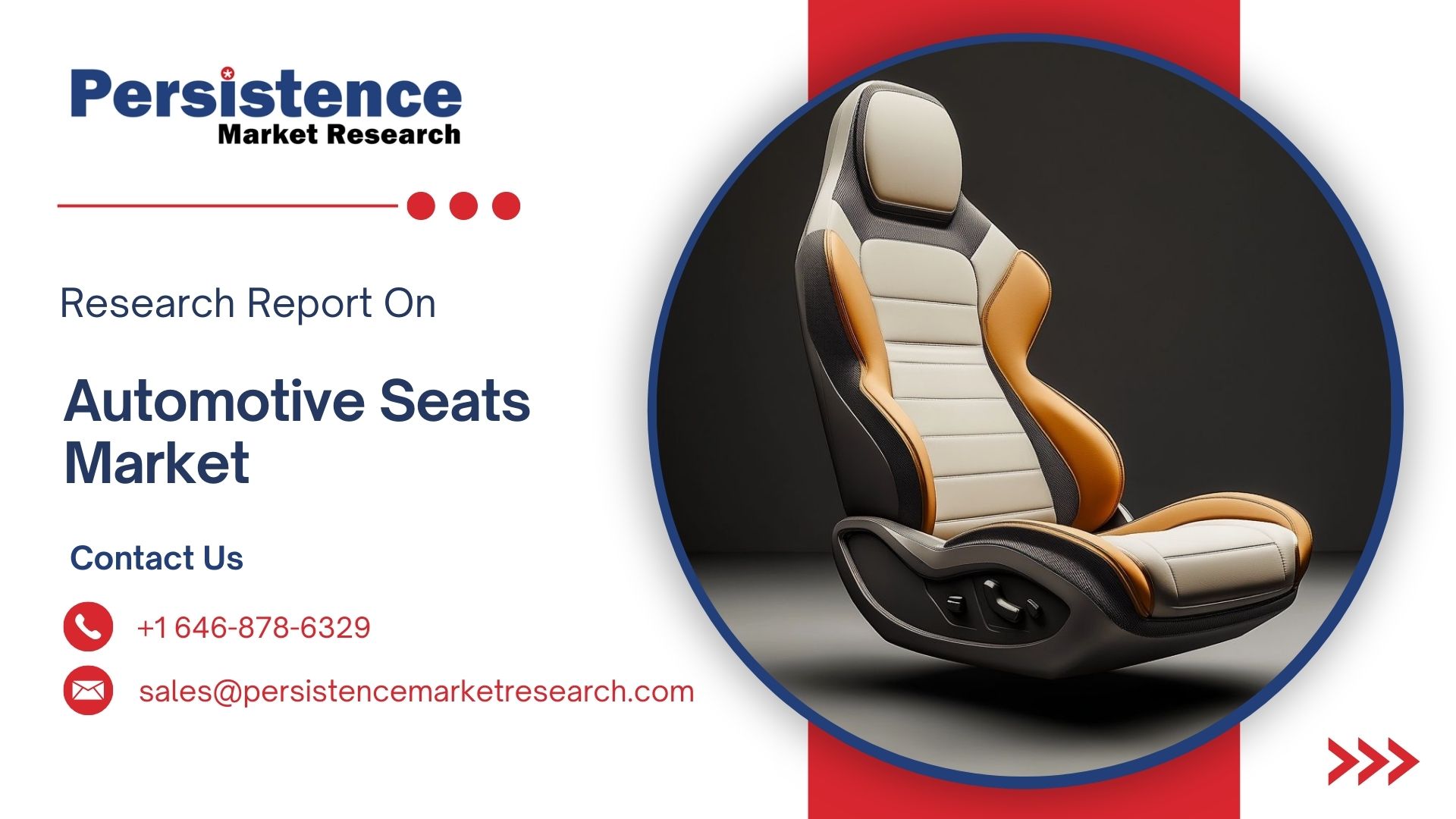
Automotive Seats Market 2026 - 2033
Global automotive seats market poised for robust growth, driven by comfort, safety, and advanced technologies shaping future vehicle interiors.
BRENTFORD, LONDON, UNITED KINGDOM, February 16, 2026 /EINPresswire.com/ -- The global Automotive Seats Market is set to witness steady expansion over the forecast period, supported by growing vehicle production, rising consumer expectations for comfort and safety, and rapid advancements in seat technologies. According to leading market research firms, the global automotive seats market size is likely to be valued at US$71 billion in 2026 and is projected to reach US$95.4 billion by 2033, growing at a compound annual growth rate (CAGR) of 4.2% between 2026 and 2033.
Automotive seats play a critical role in ensuring passenger comfort, ergonomic support, and vehicle safety. As automotive manufacturers focus on enhancing in-cabin experiences, seating systems are evolving from basic structural components to sophisticated modules integrated with electronics, sensors, and advanced materials. The increasing integration of features such as power adjustment, heating, ventilation, massage functions, and memory settings is significantly influencing market growth.
The expansion of electric vehicles (EVs), rising demand for premium vehicles, and growing emphasis on lightweight vehicle components to improve fuel efficiency are key drivers propelling the market. Furthermore, regulatory mandates related to occupant safety, including crash performance standards and seatbelt integration systems, are compelling manufacturers to innovate and invest in advanced seating designs. Emerging markets with expanding middle-class populations and increasing vehicle ownership are also contributing to sustained demand across both passenger and commercial vehicle segments.
Get Your FREE Sample Report Instantly Click Now: https://www.persistencemarketresearch.com/samples/18649
Key Highlights from the Report
➤ The global automotive seats market is projected to grow from US$71 billion in 2026 to US$95.4 billion by 2033, registering a CAGR of 4.2% during the forecast period.
➤ Passenger vehicles continue to account for the largest share of seat installations, driven by high production volumes and demand for enhanced comfort features.
➤ Powered and ventilated seats are witnessing faster adoption, particularly in mid-range and premium vehicle categories.
➤ Asia-Pacific remains the leading regional market, supported by robust automotive manufacturing hubs and strong domestic demand.
➤ Lightweight and sustainable materials are gaining prominence as OEMs prioritize fuel efficiency and environmental compliance.
➤ Integration of smart technologies, including AI-enabled seat adjustment and occupancy sensing systems, is reshaping product innovation strategies.
Market Segmentation
By Material Type
• Genuine Leather
• Synthetic Leather
• Fabric
• Others
By Technology
• Standard (Manual) Seats
• Powered Seats
• Comfort
• Others
By Vehicle Type
• Passenger Cars
• Light Commercial Vehicles
• Heavy Commercial Vehicles
• Electric Vehicles
By Seat Type
• Bench/Split-Bench Seats
• Bucket Seats
• Others
By Region
• North America
• Europe
• Asia Pacific
• Latin America
• Middle East & Africa
Customize This Report for Your Exact Requirements: https://www.persistencemarketresearch.com/request-customization/18649
Regional Insights
Asia-Pacific leads the global automotive seats market, driven by strong automotive production in countries such as China, India, Japan, and South Korea. The presence of major OEMs and component manufacturers, coupled with rising domestic demand for vehicles, has established the region as a manufacturing powerhouse. Favorable government policies supporting automotive and EV production further reinforce regional dominance.
Europe and North America also represent substantial market shares, supported by high demand for technologically advanced and premium vehicles. Stringent safety regulations and consumer preference for comfort-oriented features are driving innovation in these mature markets.
Asia-Pacific is projected to remain the fastest-growing region during the forecast period, fueled by rapid urbanization, infrastructure development, and increasing disposable incomes. The region’s expanding EV ecosystem and government incentives for sustainable mobility are expected to further stimulate seat innovation and production capacity expansion.
Unique Features and Innovations in the Market
Modern automotive seats are distinguished by their integration of advanced materials, electronics, and intelligent systems. Lightweight composite frames and high-strength steel structures are being adopted to reduce overall vehicle weight without compromising safety. Sustainable materials, including recycled fabrics and bio-based foams, are increasingly incorporated to align with environmental objectives.
Artificial intelligence is transforming seating systems by enabling real-time posture analysis and adaptive comfort adjustments. AI-powered algorithms can automatically modify seat positioning based on driver biometrics and driving conditions. IoT connectivity allows seats to communicate with other vehicle components, while emerging 5G capabilities facilitate seamless data exchange for enhanced in-cabin experiences.
Additionally, innovations such as active climate control seats, noise-reduction materials, and integrated airbags are differentiating next-generation seating solutions. Modular seat architectures are also gaining traction, enabling automakers to streamline production and customize interiors more efficiently.
Key Players and Competitive Landscape
The global automotive seats market is characterized by the presence of established players focused on innovation, partnerships, and geographic expansion.
✦ Adient plc – A leading global supplier specializing in lightweight seat structures and modular seating platforms to enhance manufacturing efficiency.
✦ Lear Corporation – Emphasizes smart seating systems integrated with connectivity and thermal comfort technologies.
✦ Faurecia SE – Focuses on sustainable materials and innovative seat architectures tailored for electric and autonomous vehicles.
✦ Toyota Boshoku Corporation – Expanding production capabilities in Asia-Pacific and developing eco-friendly seat materials.
✦ Magna International Inc. – Investing in advanced seat mechanisms and integrated electronic control systems.
These companies are strengthening their competitive positions through research and development investments, strategic collaborations with OEMs, and expansion into high-growth emerging markets.
Ready to Dive Deep? Buy Full Report Today: https://www.persistencemarketresearch.com/checkout/18649
Future Opportunities and Growth Prospects
The automotive seats market presents significant opportunities driven by evolving mobility trends and technological transformation. The rise of autonomous vehicles is expected to redefine cabin layouts, creating demand for swiveling, reclining, and reconfigurable seats that enhance passenger comfort in driverless scenarios.
Evolving regulatory frameworks emphasizing safety, sustainability, and occupant well-being will continue to shape product innovation. As automakers transition toward software-defined and connected vehicles, seating systems will increasingly serve as intelligent interfaces within the cabin ecosystem. Continuous advancements in materials science, AI integration, and digital connectivity are poised to sustain steady growth, positioning the automotive seats market as a vital component of the future mobility landscape.
Explore the Latest Trending Research Reports:
• Light Vehicle (LV) Cabin AC Filters Market
• Lightweight Automotive Materials Market
Persistence Market Research
Persistence Market Research Pvt Ltd
+1 646-878-6329
email us here
Visit us on social media:
LinkedIn
Instagram
Facebook
YouTube
X
Legal Disclaimer:
EIN Presswire provides this news content "as is" without warranty of any kind. We do not accept any responsibility or liability for the accuracy, content, images, videos, licenses, completeness, legality, or reliability of the information contained in this article. If you have any complaints or copyright issues related to this article, kindly contact the author above.
