

Tinsel Magazine Concludes "Talent First" Series With a Talent-First Standard for Live Performance
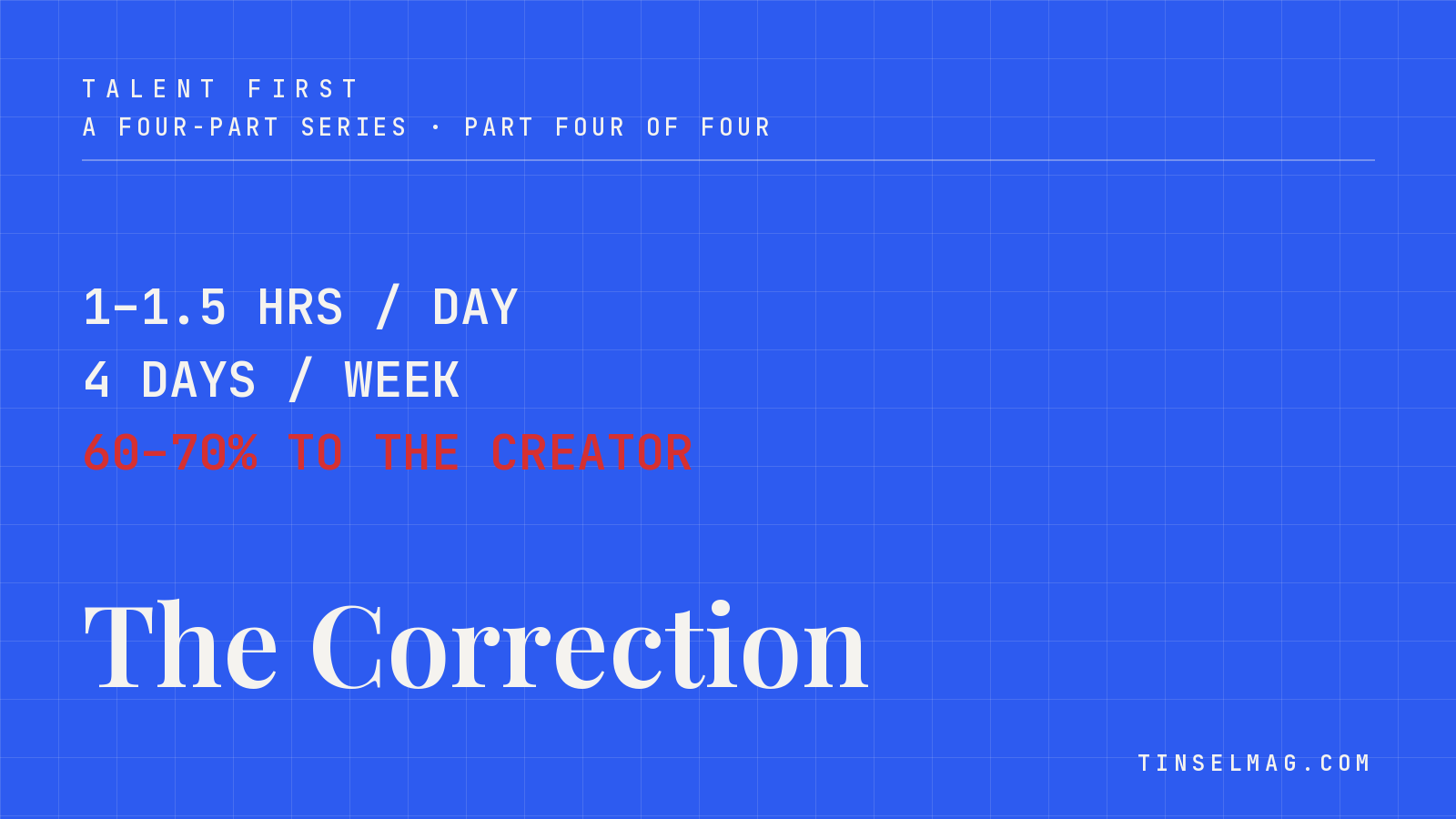
Final Installment Presents Capped Performance Hours, a Majority Revenue Share to Creators, and Professional Oversight as a Standard for the Live Economy
NEW YORK CITY, NY, UNITED STATES, August 19, 2026 /EINPresswire.com/ -- Tinsel Magazine has published "The Correction," the concluding installment of "Talent First," its four-part series on the economics of live performance. According to the publication, the finale moves from diagnosis to design, asking what live performance would look like "if it were run by someone with a stake in the performer still having a career in ten years."
The publication has disclosed that the series began with questions raised by Kenneth W. Welch Jr. and the team at Moxie Media Marketing, drawn from the company's two-year review of how live-platform ecosystems treat the talent operating inside them. The magazine notes in its Editor's Note that "the reporting, sourcing, and conclusions are Tinsel's own."
According to the article, the most complete version of the standard the finale proposes comes from Welch, the chief executive of Moxie Media Marketing, who says he is building an independent studio around it. The publication quotes Welch stating the model in a handful of sentences: "Does it have to be this destructive? An hour a day, an hour and a half, four days a week, with productive oversight of the system. Give sixty to seventy percent to the actual creator, so they can keep making beautiful and creative work for the world to see. Would that not create good revenues and incomes? You would be growing the talent pool instead of consuming it, saving the voices, keeping the talent available for the long term. A long-term productive system instead of a short-term burnout system."
According to Tinsel Magazine, each element of the standard responds to a documented finding from the series' first three parts. The article maps the hour cap to voice-recovery research finding a voice needs twelve to eighteen hours to fully recover from two hours of heavy use. It maps the majority revenue share to YouTube's disclosed 70 percent split on its fan-funding features, and to platform economics in which a company keeping a fifth of the revenue has grossed billions. And it maps professional oversight to the role the article says "every older performance industry invented, in the form of producers, coaches, and managers of record."
The article argues that the model is buildable now because its component pieces already run profitably across entertainment. According to the publication, the majority split runs today at YouTube and across subscription platforms; the capped, prepared performance schedule has kept Las Vegas residencies profitable for twenty years; and professional oversight is standard practice in every label, league, and studio that develops talent for a living. "All the pieces exist, scattered," the article states. "No live-performance business has assembled them, because assembly is an owner's job, and until now the owners in this space have been the platforms."
The article grounds that argument in documented precedent from adjacent industries. According to the publication, NBA teams rest healthy stars to protect nine-figure careers, a practice the league has formalized through its Player Participation Policy. Las Vegas residencies have demonstrated the economics of prepared, capped performance schedules: Celine Dion's residency grossed $80.5 million across 145 dates in its first year on the way to more than $385 million, and Billboard estimated Adele would earn more than $2 million per show on a weekends-only schedule. The recorded music industry, according to IFPI figures cited by the article, reports spending over $7 billion annually developing and marketing talent. In the article's words: "Fewer, better, prepared hours have out-earned more, worse ones wherever somebody owned the outcome."
The publication reports that the earnings distribution across the live economy has produced what a 2023 study in Scientific Reports found to be near the theoretical maximum of income inequality when extrapolated across all streamers. The article concludes: "The correction arrives when independent owners — studios, labels, patrons, the people whose return depends on the performer's tenth year rather than their next quarter — start building venues for live talent on the standard the platforms declined to build."
The Standard Proposed in the Article
According to Tinsel Magazine, the talent-first standard set out in the finale includes four elements:
1- Capped performance hours of approximately one to one and a half hours per day, four days per week
2- A majority revenue share to creators of sixty to seventy percent
3- Professional oversight of the performer's schedule and workload
4- A long-term development model rather than a short-term output model
The article's final word belongs to Welch. "The talent is the whole show," Welch is quoted as saying in the piece. "Build for the talent, and the audience, the revenue, and the longevity follow. We are building it now, and the invitation to the rest of the industry is open."
According to the publication, Moxie Media Marketing is building an independent studio structured around the talent-first standard described in the series.
The full installment is available now at https://tinselmag.com/talent-first-part-four/. The complete series is available at https://tinselmag.com/talent-first-part-one/, https://tinselmag.com/talent-first-part-two/, and https://tinselmag.com/talent-first-part-three/.
----
Sources Cited in the Tinsel Magazine Feature
- Hunter & Titze, ["Quantifying Vocal Fatigue Recovery," 2009](https://pubmed.ncbi.nlm.nih.gov/19663377/)
- YouTube Help, [partner earnings overview](https://support.google.com/youtube/answer/72902)
- Variety, [OnlyFans fiscal 2024 financials](https://variety.com/2025/digital/news/onlyfans-fiscal-2024-revenue-earnings-1236495750/)
- Twitch, [Dan Clancy on subscription revenue shares, September 2022](https://blog.twitch.tv/en/2022/09/21/a-letter-from-twitch-president-dan-clancy-on-subscription-revenue-shares/)
- YouTube Official Blog, [Susan Wojcicki's letter to creators, November 2019](https://blog.youtube/inside-youtube/my-final-letter-in-2019/)
- BBC Eye investigation (2022), [via Business & Human Rights Resource Centre](https://www.business-humanrights.org/en/latest-news/tiktok-profiting-from-livestreams-of-displaced-families-in-syrian-camps/)
- ESPN, [NBA Player Participation Policy, September 2023](https://www.espn.com/nba/story/_/id/38392750/source-nba-board-governors-approve-tougher-rest-rule)
- Pollstar, [The Colosseum at Caesars Palace at 20, August 2023](https://news.pollstar.com/2023/08/17/the-colosseum-at-caesars-palace-celebrates-20-years-as-home-of-the-greatest-entertainers-in-the-world/)
- Billboard, [on Adele's residency economics, November 2021](https://www.billboard.com/pro/adele-earn-2-million-las-vegas-shows/)
- IFPI, [Global Music Report, March 2024](https://www.ifpi.org/ifpi-global-music-report-global-recorded-music-revenues-grew-10-2-in-2023/)
- CNBC, [on the record-breaking 30-day livestream, December 2024](https://www.cnbc.com/2024/12/02/kai-cenat-breaks-twitch-subscriber-record-during-30-day-livestream.html)
- Scientific Reports, ["Monetization in online streaming platforms," January 2023](https://www.nature.com/articles/s41598-022-26727-5)
------
About Moxie Media Marketing
Moxie Media Marketing is a media and talent company led by chief executive Kenneth W. Welch Jr. The company represents and develops independent creators and performers, with a focus on career longevity, professional oversight, and sustainable working standards across live and digital platforms. Drawing on its two-year review of how live-platform ecosystems treat the talent operating inside them, Moxie originated the questions behind the "Talent First" series and the standard proposed in its final installment.
-----
About Tinsel Magazine
Tinsel Magazine is a digital culture publication covering entertainment, style, internet culture, and the people shaping contemporary life. Based in Los Angeles, Tinsel publishes original editorial with a focus on the creative figures, cultural movements, and industry shifts that define modern media. The magazine's Tinsel Exclusive series profiles creators, artists, and cultural figures whose work is redefining their respective fields. For more information, visit https://tinselmag.com/.
Broc Foerster
Moxie Media Marketing, Inc.
email us here
Visit us on social media:
YouTube
Legal Disclaimer:
EIN Presswire provides this news content "as is" without warranty of any kind. We do not accept any responsibility or liability for the accuracy, content, images, videos, licenses, completeness, legality, or reliability of the information contained in this article. If you have any complaints or copyright issues related to this article, kindly contact the author above.
