

Humans have evolved invasive retroelements into defenders of their genome
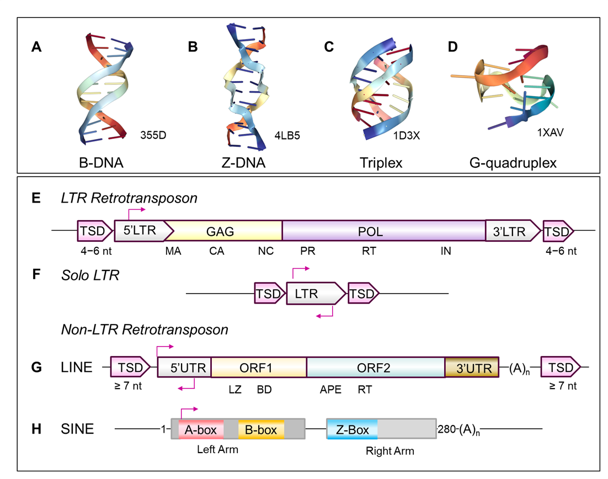
The alternative DNA conformations formed by the different retroelements that are shown in panels E-F. B-DNA is the well-known Watson and Crick Structure. The SINE family includes Alu repeats.
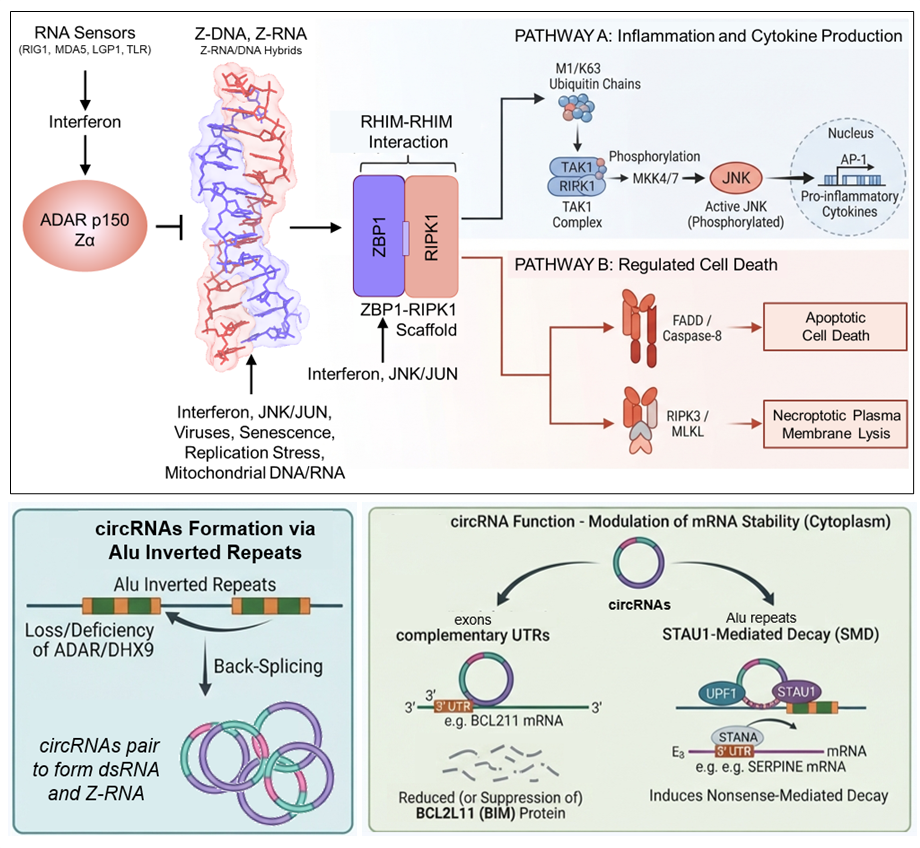
The top panel shows host defense pathways activated by Z-RNAs formed by retroelements. The lower panel illustrates how circular RNAs form from Alu SINEs. They can form Z-RNA and induce the decay of RNAs necessary for cell survival. Both effects can lead t
Before dealing with external threats posed by viruses and other pathogens, cells must first defend against attacks the retroelements that invade their genomes
In a paper just published in the International Journal of Molecular Sciences, a team at InsideOutBio described how cells resisted REs, then exploited them to protect against other threats. These threats include viruses, cancers, and the dysfunctional cells that accumulate with age. The paper examines the therapeutic applications of these findings.
One class of highly abundant REs, called SINEs (short interspersed nuclear elements), is highly prevalent in the human genome. These REs do not code for protein. To transcribe their RNAs, they rely on the same proteins a cell uses to make protein-coding RNAs. That makes them hard to target without also targeting normal genes—cells need to stop this process. Surprisingly, SINE transcripts are now a key element of host defenses.
Instead, hosts developed defenses that exploited SINE vulnerabilities. In particular, the noncanonical nucleic acid structures encoded by sequences called flipons, formed by SINEs and REs, provided an opportunity. These alternative structures, such as left-handed Z-DNA and four-stranded G-quadruplexes, keep DNA open and make it easier for the RE to copy itself into RNA. However, RE transcripts can also form the same noncanonical structures. High levels in the cell of alternative folds signal that SINEs are being expressed when they shouldn’t. Host proteins that bind these structures, particularly Z-RNA formed by the Z-Box of Alu SINEs (Figure 1), are then activated to defend the host. One of these proteins, called ZBP1, triggers an immune response to eliminate those cells expressing high levels of REs, as something is wrong with them. The RNA editing protein ADAR1 sets the threshold for this response.
Viruses also trigger high levels of RE expression. As they turn cells into viral factories, they disrupt host RNA production. By doing so, they fall into a trap. REs that lie just outside normal gene boundaries are expressed as host transcription becomes dysregulated. Their transcription indicates that the cell is not behaving normally. The SINEs and the unusual DNA structures they form trigger the immune response. Similar outcomes occur in cancers and aging cells when normal gene transcription is also dysregulated.
Humans have eliminated any RNA-dependent polymerases (RDPs) that help REs spread from the genome. This contrasts with the organisms used in classical genetic studies, like worms and flies. These species actively use RDPs to amplify pathogen RNAs that specifically target them. Human defenses rely on host sequences, not pathogen sequences. These sequences are derived from REs, turning the invader into a defender.
The paper also describes many other defense mechanisms that trace back to REs and involve numerous checks and balances. They include small noncoding RNAs like miRNAs and tRNA fragments, the role of circular RNAs, and the interplay of RNA polymerases 2 and 3 in controlling host protein expression (Figure 2). These outcomes are not designed the way an engineer would. Nature does not start with a blank page. Instead, solutions emerge that allow cells to survive threats from one moment to the next. Many insights go beyond what earlier generations of scientists conceived as possible.
InsideOutBio is a start-up focused on developing a novel class of proprietary therapeutics to ‘light up tumors for the immune system. These statements about InsideOutBio comply with Safe-Harbor laws. They are forward-looking and involve known and unknown risks and uncertainties. They are not guarantees of future performance, and undue reliance should not be placed on them.
Alan Herbert
InsideOutBio, Inc
+1 617-584-0360
email us here
Legal Disclaimer:
EIN Presswire provides this news content "as is" without warranty of any kind. We do not accept any responsibility or liability for the accuracy, content, images, videos, licenses, completeness, legality, or reliability of the information contained in this article. If you have any complaints or copyright issues related to this article, kindly contact the author above.
